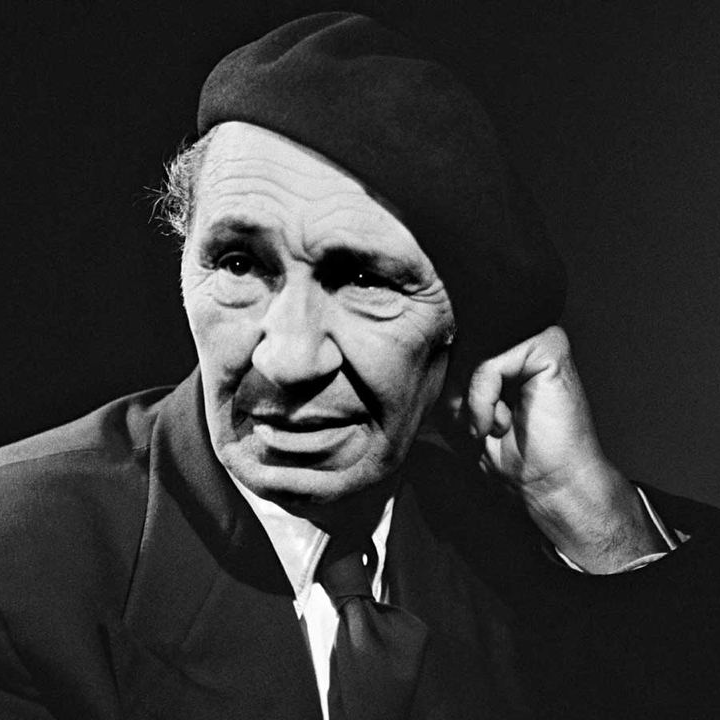
in this period it was not only humanity that was subjected to genocide, it was works of art at the same time. adolf hitler, after becoming chancellor of germany in 1933, set up a unit to loot works of art, and he put einsatzstab reichsleiter rosenberg in charge of it, a man who was an enemy of art, a skull-measuring racist and a fundamentalist, and who was desperate to get into hitler's good graces.
in fact, on march 15 of that same year, through him and his unit, a blacklist was published. the first order of business was stripping george grosz of his citizenship. the bauhaus school was shut down. names like max liebermann, kathe kollwitz, paul klee, max beckmann and otto dix were removed from their posts at the art schools. and roughly a week before these dismissals, the propaganda ministry that joseph goebbels would be put in charge of had already been officially announced. so everything had actually been planned in advance.
as far as hitler was concerned, one of the biggest cultural obstacles standing in the way of national socialism was art. he defined the modernists as people who distorted art. the futurists, the cubists and the dadaists were included in that too. their work was worthless to him. because the way he saw it, art was supposed to serve politics, and it needed to be turned into a part of nazi propaganda as quickly as possible.
and sure enough, a short time later, on july 18, the first artistic exhibition of nazi propaganda, kunst, opened in berlin. the exhibition featured the paintings and sculptures of so-called artists who were hitler bootlickers, people like arno breker, josef thorak and adolf ziegler. and of course, with plenty of hitler portraits made by various people, the rise of his party to this point was being visualized in artistic terms.
and at more or less the same time, the commission led by max von schillings and wilhelm furtwangler was busy censoring the musicians, radio stations and composers who were active in that era. television programs and films got caught in the censorship machine too, of course. and in 1935, the first state-backed propaganda film in history, triumph des willens, was released.
but hitler did not stop even there. in may of 1938, he put into effect the degenerate art law designed by einsatzstab reichsleiter rosenberg and joseph goebbels. with this law, the government would be able to seize works of art on made-up grounds and without paying any compensation. and it did not take long at all. the great majority of the confiscated works of art were sold off at very cheap prices in order to belittle the art and the artist. the ones that could not be sold were burned in an orderly fashion in berlin, under the name of a festival.
the breaks fall at the natural shifts: the setup, the 1933 blacklist and dismissals, hitler's view of modern art, the propaganda exhibition, the censorship of music and film, and finally the 1938 degenerate art law and the destruction of the works. same text as before, just paragraphed.
top: all
|
today
search in topic