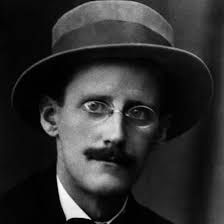
there’s a song on nirvana’s 1993 album in utero called “pennyroyal tea.” it’s one of the darkest and most inward looking tracks on the record. in it, kurt cobain writes the lines: “give me a leonard cohen afterworld / so i can sigh eternally.”
that same year, during the tour for his album the future, leonard cohen played a concert in seattle. the members of nirvana attended. two generations, two different kinds of darkness, meeting in the same room.
after kurt cobain’s death in april 1994, someone told cohen about this connection. cohen responded: “i wish i could have spoken with him. at our monastery, there are young men who come close to the edge like he did. there are ways of reaching them, not psychological ways, but essential ways. i don’t think i could have changed much. it’s just one of those endless ‘if onlys.’”
cohen never positioned himself as a savior. he never claimed that his poetry, his music, or that night at the concert would necessarily change anything. but the fact that cobain wanted cohen’s songs in his afterlife, and cohen later saying “i wish i could have spoken to him,” hangs in history like the echo of a conversation that never happened.
emil michel cioran once said, “music is the refuge of souls ulcerated by happiness.” the songs these two artists left behind continue to be a refuge in our mostly futile search for happiness.
most liked (88) - page 5
-
leonard cohen
-
favorite quotes
"the one who speaks tenderly during a breakup is the one who isn't in love."
marcel proust -
dead internet theory
the internet is genuinely dying.
the reason, as discussed here, is primarily the search engines. people have stopped producing because they can no longer get their pages noticed.
social media platforms are no different. when you search on youtube, it shows 5-10 relevant results and then completely unrelated stuff. same on x. many platforms work the same way.
this is why a lot of people who actually produce quality content eventually give up. they can't get to where they want to go. there are tons of youtube channels where they've stopped making videos.
this is exactly the kind of example i was talking about, the internet dying directly, separate from bots and so on.
ai is just the icing on the cake. ais come with biases on every topic. so you can never search for the opposite side of an issue.
for example, i search "y is actually harmless" on yandex. the ai immediately says "y is actually beneficial. no." did i fucking ask you, i say, but it just keeps arguing with me.
the search results are no different. i just want to hear the opposing view on that subject. the results insistently come back saying it's beneficial, and it never lets me search clearly. all search engines are the same. the youtube search section is the same.
and then these sons of bitches set traps just to get us to accidentally click on ads.
for example, when you're scrolling reels on instagram, everything's working fine, but the moment an ad pops up, suddenly it stops scrolling. makes you click by accident.
like, my eyes automatically filter out ads. so these sons of bitches make ads on x look like regular people's tweets. or they change ad formats to throw off your visual habits.
figured i'd vent while i was at it. -
technofeudalism
internet archive says that 25% of web pages produced between 2013-23 are no longer accessible.
this is actually because of today's techno-feudalism. because of those 3-5-10 web pages that have now taken over all of social media, nobody is making new pages anymore.
even if they do, they never get noticed because of search engine favoritism.
so nobody is building alternative structures. even forum sites are dying. because the alternatives to them are also monopolistic sites.
this might lead one to think: well, instead of opening these web pages, people will turn to those monopolistic structures. not exactly, because those monopolistic structures also push certain individuals to the forefront within their own systems. so maybe the people who would actually make a real difference are giving up on producing anything. what i'm saying here actually applies to the entire economy in the world right now.
what else is this a problem for? it's a problem for ai. if ai isn't fed with current data, it loses its effectiveness. they start running out of new data to train on.
for example, many youtube channels are giving up because they can't promote themselves enough. many artists aren't making their art because they can't get their work out there. the problem here isn't that they're producing low-quality content; it's because of algorithmic favoritism. and we can generalize this to the entire economy as well.
especially in the us, creative ideas have stopped emerging. productive people have been pushed out of the economy through things like diversity initiatives and positive discrimination for women. because the system, at its simplest, is pushing out masculinity and handing out positions and titles based on certain ideologies rather than actual merit. -
loneliness
if you laugh together with others but cry apart from them, you are lonely.
-
the wizard of oz
fact 1: there isn't a single black person in the film; the only ones who could even count as black are the monkeys alongside the witch, and they represent evil anyway. for this reason, some argue that the film is racist.
fact 2: the yellow brick road that dorothy walks on is seen as the road that led farmers to washington. in fact, in some circles, oz itself symbolizes washington.
fact 3: kansas was the last state to incorporate newton's laws into its school textbooks, and it was once home to the most conservative segment of america. whether it's a coincidence that the film is set there is anyone's guess. -
julius caesar
while studying julius caesar, i realized this man was anything but ordinary. he was a virtually unbeatable commander. he won every battle he ever fought. it's also said that he occasionally suffered from epileptic seizures.
you can see these kinds of things in leaders like him. i've also heard of leaders who, after drinking themselves into a stupor, would receive something resembling divine revelation (the inspiration of satan). these kinds of signs always indicate that they're receiving heavy support from the spiritual realm. because behind the scenes, in the metaphysical world, countless negative entities are working for them (lenin, stalin, hitler, mao, and so on should all be considered in this category).
but let's not perceive this situation like the war between the god of good and the god of evil in zoroastrianism, attributing real power to the dark side. of course, anyone who wants to can choose the dark side. the divine order grants everyone the right to choose, and there's room for everyone in this realm. and divine wisdom employs even those who choose the dark side; it puts even them to work.
for example, this world needs thieves too. even thieves fulfill their assigned roles in the divine plan. they're sent against those who deserve to have their belongings stolen. dark leaders are likewise appointed as heads of dark societies (note this carefully... those leaders didn't get there by their own genius. the sovereign appointed them. as bandit chiefs over societies that have sunk to the level of bandits...).
but no one is forced to become a thief or bandit chief or anything like that. a person, by choosing the wrong path at every crossroads in life, eventually drags themselves down to that state. the same goes for murderers, tyrants, and all the people of darkness. each of them brings themselves to that state; but divine wisdom doesn't let any of them go to waste. it employs even them as villainous characters in this game we call "the world."
rumi says in the masnavi: when you enter a turkmen camp, the dogs immediately attack you. whatever you do, don't try to fight the dogs. just call out to the owner of the dogs. those beasts that turn into lions against you become like gentle kittens with a single scolding from their owner. all it takes is for the owner to say "shoo" to them once...
of course, these aren't things that can be accomplished with the upper brain (cortex) alone. when a person comprehends these things with their heart (lower brain), no enemy remains for them in the realm. they all turn into divine agents. by calling out to the owner of the dominion (the truth), a person can instantly save themselves and find safety from any tyrant, evildoer, devil, antichrist, thief, murderer, and so on. unless divine wisdom has willed otherwise. in that case, they're obligated to be patient (still, knowing this as upper-brain knowledge isn't entirely worthless. knowledge does affect the heart, even if only slightly, and as a person works on that path, the effect begins to grow in the heart).
what am i trying to say?
there are no enemies...
so no grudges, no hatred, no anger toward anyone...
no quarreling...
no fighting...
think for a moment, who are you fighting against...
(these are matters of the heart. whatever needs to be done outwardly is done. for example, the person whose belongings are stolen feels these things inwardly; but still, to uphold the rights of the outer world, they file a report with the police).
conclusion: there are only divine agents. they're all just carrying out their duties. the divine order unleashes them upon those who deserve it, as a punishment...
even devils and antichrists are like this...
(note: the fact that they're agents and appointed doesn't mean they're innocent or that they won't face wrath. let's not fall into mistaken understandings). -
adolf hitler
after becoming chancellor of germany, he survived 44 assassination attempts or plots, large and small. hitler was guarded by an eight-man personal protection team, a 50,000-person ss security regiment, and a thousand palace guards. these attempts failed by chance, poor planning, or reasons that remain uncertain. some of the most notable:
one plot involved placing a bomb on hitler’s plane. by 1943, germany’s heavy losses on the eastern front created widespread frustration in the public and strong opposition to hitler inside the military. major general hans oster in military intelligence had despised hitler from the beginning and searched for a chance to act. colonel von tresckow volunteered to carry out the plan, but they first needed to lure hitler to smolensk, a city near the front. field marshal von kluge agreed to issue the invitation. tresckow originally planned to shoot hitler during an inspection meal, but von kluge objected, saying such a killing would dishonor the army and ruin its reputation. they instead created a time-delayed bomb hidden in a liquor bottle and had hitler’s aide, heinz brandt, carry it as a gift. the bomb was powerful enough to split the plane apart midair and make the death appear accidental. however, it never detonated. the cold conditions inside the aircraft may have prevented it from activating, but even after landing the device remained inert. the failure was never fully explained. tresckow later took his own life to avoid arrest, and oster was eventually executed for his role.
another attempt came from georg elser, a carpenter who viewed hitler as a dangerous warmonger and wanted to stop him before a world war began. in 1938, elser stole gunpowder from army supply depots and traveled to the burgerbraukeller beer hall in munich, where hitler had delivered speeches early in his political career. elser hid inside the building at night and constructed a concealed chamber in the speaker’s platform to hold a time-delayed bomb. on the day of the speech, hitler left earlier than usual because of weather conditions affecting his travel schedule. thirteen minutes after he departed, the bomb exploded, killing eight people and injuring sixty-three. elser was captured while trying to flee to switzerland, tortured, and later imprisoned in a concentration camp. he survived for several years but was executed in 1945 on hitler’s personal orders as germany faced defeat.
a third attempt came from maurice bavaud, a 22-year-old devout catholic angered by hitler’s harsh treatment of the church and rumors that he intended to replace christianity with a racial, nationalist belief system. to get close to hitler, bavaud read mein kampf and dressed to blend in as a nazi sympathizer. he attempted to approach hitler at his mountain residence, but guards turned him away. he then traveled to munich for an annual parade where hitler would appear in an open motorcade. armed with a small pistol, he positioned himself to fire at close range. however, when the crowd raised their arms in salute, his view was blocked, he panicked, and he fled. while trying to stow away on a train to france, he was caught, interrogated, and executed by guillotine at ploetzensee prison in 1941.
the most famous attempt was operation valkyrie. by 1944, most of germany’s military leadership believed the war was lost. soldiers at the front described death as relief compared to continued fighting. many senior officers believed hitler had to be removed so peace could be negotiated with western powers while germany continued resisting the soviet union. colonel claus von stauffenberg, who had lost an eye and a hand in battle, volunteered to plant a bomb during a meeting at hitler’s wolf’s lair headquarters. stauffenberg placed a briefcase containing explosives near hitler and left under a prepared excuse. the bomb exploded, killing four and injuring twenty, but hitler survived with minor wounds and partial hearing loss because the meeting table had been moved, redirecting the blast. the conspirators were quickly arrested, put in show trials, and executed. stauffenberg himself was killed by firing squad the same day by general fromm, who hoped to hide his own knowledge of the plot. hitler then spoke to the nation by radio, claiming destiny had protected him. his rule continued until he died by taking cyanide the following year. -
social credit system
this is a system china has used for a decade now. it has become normalized and its main shape is set, but it has turned people against each other and poured gasoline on an already rotten moral landscape.
don’t treat it like a black mirror episode that only affects citizens. that ship sailed a long time ago. it is not limited to individuals. companies, vehicles, public agencies, public services, all have different credit frameworks managed by different ministries.
for example the people’s bank of china tracks financial credit records, the ministry of transport records drivers and logistics companies’ violations, and the supreme people’s court collects criminal and legal violations. each agency feeds data into national and provincial platforms and those records are later shared across administrative levels for scoring.
the state also gets data from private companies for the commercial side. the famous sesame credit is run by a private company. that company watches millions of businesses tied to supposedly private groups like alibaba and tencent and shares that data with the relevant ministries. on paper it sounds reasonable and rational, right? yeah it sounds smart. you think wow what a system they built, but the reality is not so clean.
say a driver didn’t stop for pedestrians at a crosswalk. the transport ministry lowers the vehicle and driver’s traffic score. a criminal court could lower the driver’s overall credit score in addition to license penalties. if the vehicle belongs to a company, the company’s score drops a bit as well. so the citizen, the vehicle, and the company all get penalized in a chain. the citizen gets yelled at by the company, the state, and traffic police. sure, that motivates someone to not repeat the mistake.
but this system, which seems logical in theory, is full of gaps and errors. first, it ignores human context like in the example above. in a country like china there are so many people who will exploit those gaps. conditioning citizens like pavlov’s dogs to obey the system does more harm than good.
on top of that, when people do good deeds they often do them for points. and if they think doing something will cost them points, they will avoid doing it. so instead of a real moral conscience you get a reflex to chase points. a culture of surveillance and snitching spreads. people are constantly encouraged to report each other. that kills empathy. if you want another show analogy, think squid game.
exploiting these gaps is common and happens all the time. for example, if you hit a pedestrian in china your worry is not just your credit score. you must cover that person’s entire expenses. because of this, some drivers try to run over victims multiple times to kill them. yes you read that right. i am not joking.
if you kill them and are not tried for murder, you only pay funeral costs. if the person survives you have to pay all medical costs plus hush money to avoid a public lawsuit and those sums can be huge. you might close a death case with 50,000 dollars, but if the victim lives the compensation could reach 500,000 dollars. there are dozens of reports and videos about this online.
meanwhile, fake pedestrian scams are common in china. that’s why many cars install multi-angle camera systems. even if cameras record the incident and you are right, a scammer can still file a complaint and it can affect your social credit. the appeals process exists but it is slow and bureaucratic. and since there is no independent watchdog, even if you are right you might not be able to prove it.
this system has deeply damaged neighborhood, family, and institutional trust. mao and the cultural revolution already wounded china’s guanxi culture, the personal connection networks people used to rely on. villagers used to have tight bonds. those bonds shrank down to family and close friends, and now the system is even attacking the last safe zone, the family.
so if a man doesn’t beat his wife, it may be because he fears a complaint will lower his score rather than because of moral principles. china no longer has a natural trust or universal morality. instead there is a system that treats everyone as a potential risk. people even avoid helping obviously injured strangers because they might be scammers. scammers exploit those gaps to the fullest.
there is also a status and class angle. this supposedly equal, communist, socialist country has well-known rigid social classes. i won’t even get into oppressed ethnic minorities who in some cases aren’t treated as fully human. there is a de facto hukou system and an untouchable elite of ccp members. take families of former princely lines, called taizidang. no one touches them. their social credit never drops.
say a boss from this class sexually harasses his secretary and fires her because she refused. then someone writes a complaint about the woman. she won’t just lose her job or be slandered. the system will publicly shame her on giant led screens with her name and photo, making her life even harder.
they don’t stop at name and photo. they post home addresses. they’ll claim she sold company data or robbed the till. those specifics don’t matter. what matters is the system offers no help for the poor. if your credit was already low, a single strike can ruin you. you become ostracized, can’t buy bread at the grocery, might not be able to ride the bus. the victim is the poor person again and that is exactly the black mirror part.
even before the system came online these people had a hard life. civil service used to be miserable. now it’s worse because the credit system creates a special tier for state employees. i’m not saying public servants can’t trade on the stock market like in other countries. even getting a passport is subject to state control.
for example if you are a random civil servant and want to travel abroad you must apply to your superiors and to the communist party. they review it and if they approve they tell you how many days you can go. if you get a week you must take your passport to your boss, get a signed stamp, then return the passport after a week. in strategic sectors even family members need permission to travel.
civil servants absolutely cannot participate in religious ceremonies, go to hajj, or visit church. opening a foreign bank account, buying property abroad, or sending children for long-term education is banned or needs prior approval. these days even using a vpn is grounds for investigation. people can lose their jobs for accessing twitter. how do they know? because being a civil servant often requires installing government apps on your phone. they literally know everything down to the color of the mess you made.
state workers must get permission before publishing academic papers, giving press interviews, attending foreign conferences, or appearing on podcasts. even having an alcoholic relative affects your record and social credit. you can be penalized because your brother-in-law is a scumbag. as i said, civil servants have a separate discipline scoring system that affects salary, promotion, and loyalty measures.
it will only tighten more in the future and it will hit the lower classes hardest. almost every device we use today is electric and networked. if your electric car’s score drops it could be disabled until you raise it or pay your fine. in a country where even a hand towel in a restroom might work with face recognition or fingerprint control, none of this is far-fetched. -
arrest of ekrem imamoglu
a coup attept.
this isn't a legal case, it's entirely political. erdogan knows he would lose against this man, so he's doing everything he can, even illegally, to block imamoglu. erdogan likely won't enter an election he knows he'll lose and won't allow power to change hands through democratic means. imageimageimageimageimageimage -
mesa selimovic
mesa selimovic was born in tuzla (then part of the kingdom of yugoslavia), selimovic was educated in philosophy and literature. his experiences during world war ii, when he joined the partisans (the yugoslav resistance movement), had a profound effect on his worldview.
writing style: selimovic's prose is often introspective, nuanced, and laced with philosophical musings. rather than focusing solely on action-driven plots, he meditates on the nature of identity, freedom, and moral dilemmas.
literary significance: he is widely regarded as one of the greatest bosnian authors, praised for merging local balkan storytelling traditions with universal existential concerns.
why is he important?
psychological depth: selimovic's works delve into his characters' inner lives, revealing profound moral and psychological struggles.
cultural reflection: his novels are deeply rooted in the cultural and historical contexts of bosnia and herzegovina, capturing the region's social fabric, multi-ethnic heritage, and ottoman legacy.
universal themes: while his settings are often geographically and historically specific, selimovic's reflections on power, justice, and self-realization transcend cultural boundaries.
notable works
death and the dervish, 1966
revolves around a dervish (a member of a sufi muslim ascetic order) named ahmed nurudin. he grapples with the imprisonment of his brother by ottoman authorities.
the novel depicts moral quandaries about loyalty, revenge, faith, and the cost of remaining silent. it's often described as a metaphor for living under repressive regimes.
considered selimovic's masterpiece, it presents a philosophical journey examining how fear and power structures corrode personal integrity.
the fortress, 1970
taking place in an ottoman-era balkan town, this story follows a soldier returning from war, struggling to reintegrate into society.
the tension between personal faith and social expectations, the complexities of love and marriage, and the haunting after-effects of war.
alongside death and the dervish, this novel cemented selimovic's reputation for blending historical context with enduring questions about belonging and identity. -
suspicious minds
elvis presley's "suspicious minds" is a masterpiece for a number of reasons. it is a perfectly constructed pop song, with a catchy melody, driving beat, and soaring vocals. the lyrics are both relatable and universal, exploring the themes of jealousy, insecurity, and the importance of trust in a relationship.
the song was also a critical and commercial success, winning a grammy award for best male pop vocal performance in 1969. it reached number one on the billboard hot 100 chart in the united states and the uk singles chart, and has since been covered by numerous artists.
here are some of the things that make "suspicious minds" a masterpiece:
the song's structure is perfect. it begins with a simple, yet haunting melody, which is gradually joined by the beat and other instruments. the song builds to a climax in the chorus, with elvis's vocals soaring over the top.
the lyrics are both relatable and universal. they explore the themes of jealousy, insecurity, and the importance of trust in a relationship. everyone can relate to feeling suspicious of their partner at some point, and elvis's vocals convey this emotion perfectly.
the song's production is top-notch. the sound is clean and crisp, and the arrangement is well-balanced. elvis's vocals are the star of the show, but the other instruments provide excellent support.
numbers, awards, and fun facts about "suspicious minds":
the song reached number one on the billboard hot 100 chart in the united states and the uk singles chart.
it won a grammy award for best male pop vocal performance in 1969.
it has been covered by numerous artists, including aretha franklin, mark james, and fine young cannibals.
the song was featured in the film "home alone" (1990).
in 2004, rolling stone magazine ranked "suspicious minds" number 91 on its list of the 500 greatest songs of all time.
fun fact: the song's original title was "can't help falling in love". however, elvis presley's manager, colonel tom parker, suggested that the title be changed to "suspicious minds", as he thought it would be more appealing to the public. -
droit du seigneur
droit du seigneur, also known as "the right of the first night," was a feudal practice in medieval europe in which a lord or nobleman had the right to sleep with a subordinate woman on her wedding night. the lord or nobleman would typically demand that the woman spend the night with him before consummating her marriage with her husband. this practice was considered a privilege of the feudal lord and was often enforced through intimidation or force.
although there is some debate among historians as to whether the droit du seigneur was ever actually practiced, it has been immortalized in literature and popular culture. one of the most famous examples is in the play "the marriage of figaro" by pierre beaumarchais, which was later adapted into the opera "the barber of seville" by gioachino rossini. in the play, the character of count almaviva attempts to exercise his right of the first night with figaro's fiancee, susanna, but is ultimately foiled by the clever schemes of the other characters.
another example of droit du seigneur can be seen in the legend of robin hood. according to some versions of the legend, robin hood's love interest, maid marian, was to be married to the sheriff of nottingham, who planned to exercise his right of the first night with her. robin hood intervenes and saves maid marian from the sheriff's clutches, leading to their eventual marriage.
in modern times, the droit du seigneur is widely regarded as a myth or a cultural trope rather than a historical fact. however, it continues to be referenced in popular culture and serves as a symbol of the abuses of power and privilege that have occurred throughout history. -
redneck
the term "redneck" has a complex and varied history, and its meaning has evolved over time. originally, the term was used to describe poor, white farmers in the southern united states who had sunburned necks from working long hours in the sun.
in the late 1800s and early 1900s, the term "redneck" was sometimes used as a derogatory term for white people who supported populist or labor movements, particularly in the southern states. it was also used to describe poor, rural whites who were seen as uneducated and uncultured.
during the mid-1900s, the term "redneck" began to take on a more specific meaning, referring to working-class white people who were perceived as conservative, rural, and often politically reactionary. this usage became more common in the 1960s and 1970s, during the civil rights movement and the vietnam war, when the term was often used to describe white southerners who opposed social and political change.
today, the term "redneck" is still used in a variety of ways. some people use it as a term of pride, celebrating their rural heritage and working-class roots. others use it as an insult, suggesting that someone is uneducated, close-minded, or backwards. overall, the meaning of the term "redneck" is complex and multifaceted, and it continues to evolve in response to changing social and political contexts. -
simp
"simp" is a term used to describe a man who is overly attentive, affectionate, or submissive towards a woman, often with the hope of winning her affection or approval.
here's a funny example:
imagine a guy, let's call him dave, who has a huge crush on his coworker, jane. dave is always going out of his way to do things for jane, like buying her coffee every morning, offering to help her with work projects, and complimenting her on everything she does. he even starts wearing clothes that he thinks jane will like, and changes his hairstyle to match hers.
one day, jane needs someone to water her plants while she's out of town, and dave jumps at the opportunity. he spends hours carefully watering each plant, talking to them as if they were his own children, and even sings to them. when jane returns and sees how well her plants have been cared for, she thanks dave and gives him a hug.
at that moment, dave's heart swells with joy and he thinks to himself, "this is it! she's finally going to realize how much i care about her!"
but then jane pulls away and says, "you're such a good friend, dave. you're like a little plant-sitting simp!"
and that, my friends, is a funny example of a simp in action.