istanbul mayor ekrem imamoglu, a leading opposition figure from the republican people's party (chp), has emerged as a symbol of resistance in turkey's evolving political scene. renowned for his reformist approach and strong connection with urban voters, he gained national prominence after winning istanbul's mayoralty in 2019 under contentious circumstances. his recent detention on charges of corruption and terrorism has triggered widespread protests, heightened economic uncertainty, and renewed debates over democratic freedoms in turkey. the incident is seen as a critical juncture in a long standing power struggle between the government and its critics.
timeline of key events
march 18, 2025
istanbul university annuls imamoglu's degree amid allegations of irregularities, a decision that jeopardizes his eligibility to run for president.
march 19, 2025
turkish police surround his residence in istanbul early in the morning. despite sending a message of resolve on social media, declaring that he would not give up, imamoglu is detained along with over 100 others on charges including corruption, extortion, and alleged ties to terrorism.
march 23, 2025
he is formally arrested on corruption charges and transferred to marmara prison. authorities accuse him of leading a criminal organization connected to municipal contracts and by extension influencing ties with designated terrorist groups.
march 24, 2025
mass protests erupt nationwide in response to his arrest. the government enforces restrictions on public gatherings and social media, while economic indicators show a sharp downturn amid rising political uncertainty. international voices call for upholding democratic processes, underscoring the broader impact of these events.
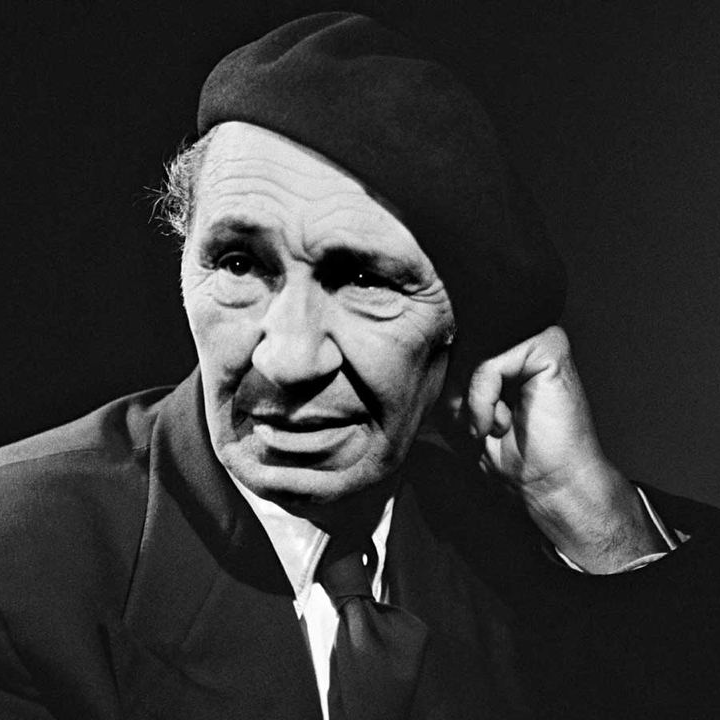
the fisherman of halicarnassus
- 163
- 12
- 5
- 0
- 1 day, 19 hours ago
-
chaotic neutral
 30 karma
-



haliey welch
everyone's all focused on the hawk tuah thing, but the real bomb she dropped was when she said, "the only way to get over one is to get under another."
entries (163) - page 5
-
arrest of ekrem imamoglu
-
whiplash (2014 film)
whiplash, directed by damien chazelle, explores deep philosophical themes related to ambition, perfectionism, the nature of greatness, and the moral costs of success. the film follows andrew neiman, a young jazz drummer, and his intense relationship with his abusive music instructor, terence fletcher. the philosophical undertones of the film resonate with various philosophical ideas on ethics, existentialism, the pursuit of excellence, and the role of suffering in personal growth. let's explore "whiplash" through the lens of key philosophers and their theories:
1. nietzsche and the will to power
friedrich nietzsche argued that life's driving force is the will to power, which is the desire to grow, dominate, and transcend oneself.
andrew's relentless pursuit of drumming excellence reflects nietzsche's concept of the übermensch (overman), who seeks to surpass human limitations through sheer strength of will and self-overcoming. fletcher represents the harsh force of nature or society that tests andrew's strength and pushes him toward this higher state of existence.
nietzsche believed that suffering and struggle are necessary for greatness:
"that which does not kill us makes us stronger."
andrew's suffering under fletcher's brutal teaching methods becomes a crucible for his transformation into a musical virtuoso. he embraces the pain and struggle as a means of transcending mediocrity, embodying nietzsche's idea that greatness comes through suffering and overcoming.
2. aristotle and the doctrine of the mean
aristotle proposed the idea of the golden mean, which means that virtue lies in finding a balance between extremes.
fletcher's teaching style represents an extreme, pushing andrew to his psychological and physical limits. aristotle would argue that fletcher's methods are excessive and harmful, as they violate the principle of moderation.
andrew, on the other hand, eventually adopts a similarly extreme work ethic, rejecting balance in favor of total dedication to drumming. aristotle would likely critique fletcher's methods as lacking virtue since they involve excess rather than balance. true greatness, in aristotle's view, would require both skill and emotional well-being, which andrew sacrifices in his obsessive pursuit of perfection.
3. kant and the categorical imperative
immanuel kant proposed that moral actions must follow a categorical imperative, meaning that an action is morally right only if it could be universally applied without contradiction.
fletcher's abusive teaching methods would violate kant's moral principle because they involve manipulation, deceit, and harm. kant would likely argue that fletcher's ends (creating a great musician) do not justify his means (psychological abuse).
andrew's eventual acceptance of fletcher's methods suggests that he internalizes a consequentialist mindset, valuing the outcome (musical greatness) more than the moral process. kant would argue that true moral greatness cannot arise from unethical means, even if the artistic result is remarkable.
4. sartre and existentialism
jean-paul sartre believed that human beings define themselves through their actions and choices. life has no inherent meaning except what we create for ourselves.
andrew's decision to endure suffering and push himself toward greatness reflects existentialist freedom. he chooses his own meaning through his devotion to music.
fletcher represents a figure of existential challenge. he creates an environment where andrew is forced to confront his limitations and choose who he wants to become. andrew's climactic drum solo represents a moment of existential authenticity, where he asserts his artistic identity and finds freedom through creative expression.
sartre would see andrew's journey as an example of "existential authenticity," where andrew confronts the absurdity of his suffering and creates his own artistic purpose.
5. hegel and the master-slave dialectic
georg wilhelm friedrich hegel introduced the concept of the master-slave dialectic, a dynamic where self-consciousness arises through the struggle between dominance and submission.
fletcher embodies the role of the "master" who seeks to create greatness through dominance and fear. andrew begins as the "slave," responding to fletcher's demands and expectations.
the climax of the film, where andrew delivers a transcendent performance on his own terms, symbolizes the reversal of this dynamic. andrew asserts his artistic independence and "masters" the relationship.
hegel would view andrew's final performance as a synthesis. andrew absorbs fletcher's brutal methods but transcends them to assert his own creative identity.
6. john stuart mill and utilitarianism
john stuart mill proposed that moral actions are those that maximize happiness and minimize suffering for the greatest number of people.
fletcher's abusive teaching style would fail the utilitarian test because it produces intense suffering for andrew and others. however, fletcher might argue that the long-term happiness (creating a musical legend) justifies the short-term pain.
mill's principle of higher pleasures might complicate the analysis. does the artistic greatness that andrew achieves justify the pain it took to get there? mill would likely reject fletcher's methods because the suffering outweighs the positive outcome for most students. however, the exceptional result of andrew's greatness might create a moral gray area.
7. kierkegaard and the leap of faith
soren kierkegaard argued that true meaning and greatness require a leap of faith, which is a radical commitment to an uncertain outcome.
andrew's choice to stay on stage and deliver a flawless performance despite fletcher's sabotage reflects this leap of faith. he trusts his inner artistic vision and steps into uncertainty, embodying kierkegaard's concept of authentic self-realization.
kierkegaard would likely see andrew's final performance as a moment of existential courage and self-transcendence. -
adolescence (tv series)
to understand jamie's story, it's important to first understand masculinity. especially, when it becomes distorted. when masculinity is out of balance or exaggerated, it's often a defense mechanism against deep feelings of shame and inadequacy.
--spoiler--
by the end of the show, we learn that jamie's father, eddie, was abused by his own father. eddie swore that he would never pass that violence onto his kids but his explosive anger made jamie feel that violence anyway. the bigger problem, though, is eddie's attempt to "teach" jamie how to be a man. jamie idolizes his father but constantly feels like a failure in his eyes. eddie is disgusted by jamie's introverted nature and lack of traditional masculinity. he sends jamie to sports clubs to "toughen him up," and jamie tells the psychologist about this pressure to perform.
jamie never feels accepted because he can't reconcile his sense of self with his father's definition of masculinity. the psychologist recognizes that jamie's struggle with identity and connection stems from this emotional disconnect with his father and grandfather.
jamie's mother, on the other hand, is passive and overly accommodating. she's the "everything's fine" type always smoothing things over and shielding jamie from discomfort. in the fourth episode, she wonders, "did we fail to really see him?" she starts questioning whether she taught him the right values or if she failed as a parent. jamie grew up emotionally protected but unseen his mother's overprotection left him without the emotional tools to handle rejection or discomfort.
jamie develops a core belief that he's incompetent and unlovable. he feels shame, and since his father is his role model, jamie mimics his father's anger in his own life. this leads to dangerous emotional patterns.
jamie is labeled an "incel", someone who identifies as involuntarily celibate. like many others in that category, jamie's feelings of rejection, loneliness, and inadequacy turn into resentment toward women. he believes he's ugly and unworthy of love, but he also craves connection. the problem is that he doesn't know how to form meaningful bonds because he was emotionally neglected at home. his mother's overprotection made him fragile. the smallest rejection from a girl sends him into a tailspin. that's why he asks his psychologist, "do you love me?" jamie is desperate for validation. when he doesn't get it, his default response is anger.
the show touches on complex issues: the dangers of incel culture, the impact of emotional neglect, generational trauma, peer pressure, and the struggle for male identity.
jamie's therapy sessions are intense and uncomfortable to watch and some scenes feel deliberately too long. that's the point. it's not supposed to be easy. the slow pace forces you to sit with the discomfort, just like jamie has to.
--spoiler-- -
mary vincent
some people survive. others refuse to be victims.
in 1978, 15-year-old mary vincent was left for dead—her arms hacked off with a hatchet, her body thrown off a 30-foot cliff.
but she didn't die.
she packed her severed limbs with dirt to stop the bleeding.
she climbed back up that cliff.
she walked nearly three miles, naked, drenched in blood, holding up the raw stumps of her arms so she wouldn't bleed out.
cars passed. no one stopped.
until one couple finally did.
her attacker, lawrence singleton, served just eight years in prison. when he walked past her in court, he whispered:
"i'll finish the job when i get out."
mary vanished. she lived in fear. but she never stopped fighting.
singleton? he did it again. he murdered a woman named roxanne hayes in 1997. this time, there was no early release—he was sentenced to death.
mary? she rebuilt her life. she went to college. she had kids. she became an artist. she testified against him at trial, ensuring everyone knew exactly what kind of monster he was.
she wasn't just a survivor. she won.
mary vincent is what happens when a person refuses to break.
imageimageimage -
zeno of elea
an ancient greek philosopher (c. 490–430 bce) known for his paradoxes that challenge the concepts of motion, plurality, and space. he was a student of parmenides and contributed significantly to the development of dialectical reasoning and the philosophy of monism.
zeno was a defender of parmenides' doctrine that reality is unchanging and indivisible, using his paradoxes to argue that motion and multiplicity are illusions.
his ideas laid the groundwork for later developments in mathematics, physics, and logic, influencing thinkers like aristotle and modern mathematical theorists.
famous paradoxes:
achilles and the tortoise: demonstrates that a faster runner (achilles) can never overtake a slower one if the latter has a head start, questioning the nature of infinite divisibility.
the dichotomy paradox: argues that to travel a certain distance, one must first travel half of it, then half of the remaining half, leading to an infinite regress.
the arrow paradox: claims that an arrow in flight is actually at rest at any single instant, implying motion is an illusion. -
thomas bernhard
thomas bernhard's life was marked by relentless misfortunes from the very beginning. born out of wedlock, he carried the stigma of "illegitimacy" in a society that cared deeply about such things. his mother never hid her contempt for him, and his childhood was overshadowed by a sense of rejection. physical illnesses repeatedly brought him to the brink of death, and a misdiagnosis by a doctor cost him his beloved grandfather—one of the few people he truly loved. although bernhard's parents were austrian, his mother, desperate to escape the social pressures of an illegitimate birth in austria, delivered him in a monastery in heerlen, in the netherlands. he was later raised by his grandparents back in austria.
at eleven years old, bernhard was sent to a boarding school in salzburg, where he studied music aesthetics, violin, and voice. by the late 1940s, he developed the severe lung disease that would haunt him for the rest of his life. during a two-year stay at the grafenhof sanatorium, he suffered devastating losses: first his grandfather, the single most important person in his life, and then his mother a year later. by the time he left the sanatorium, he was a budding young journalist, forced early on to grapple with grief and existential questions.
bernhard's first significant published work was a poetry collection, auf der erde und in der hölle (on earth and in hell), released in 1957. however, his true literary breakthrough came in the spring of 1963 with his first novel, frost (freeze), which quickly garnered critical acclaim. at the time, bernhard was living with his aunt in vienna, making ends meet by taking on construction jobs—digging trenches, driving trucks—and steadily forging his unique literary identity. frost earned him the bremen literature prize, which opened new doors.
with the prize money and additional support from his publisher, bernhard bought a farmhouse in upper austria. he spent most of his life there in isolation, venturing abroad frequently but always returning to this rural retreat. yet he never severed his ties to vienna. he regularly traveled back and forth between the countryside and the city, unable to settle comfortably in either place. whenever he grew weary of rural life, he fled to vienna, and as soon as vienna lost its appeal, he hurried back to his farmhouse. when neither option satisfied him—something that happened often—he escaped beyond austria's borders altogether. in fact, he wrote most of his books during these restless journeys.
in an interview, bernhard explained that every one of his books was created in different places—vienna, brussels, somewhere in yugoslavia, poland. he never had a dedicated writing desk and preferred working in noisy environments. construction cranes, bustling crowds, blaring streetcars, even laundries and butcher shops—none of these disturbed him. he found it stimulating to write where he didn't speak the local language, calling it an "encouraging" factor.
bernhard's fame soon spread beyond austria and germany. he was met with great enthusiasm in many parts of continental europe, especially in italy, spain, and france, where his works were quickly translated. his influence was also immense in russia and across the former soviet republics, earning him recognition in slavic literary circles.
over his lifetime, bernhard was astoundingly prolific: nine major novels, five long stories, four volumes of short stories, two volumes of shorter prose pieces, a five-volume autobiography, eighteen plays, several shorter dramas, three volumes of poetry, and countless interviews. he even had many unpublished works that rivaled in quantity those he had already released.
this vast output brought bernhard numerous awards. he received the julius campe prize in 1964, the bremen literature prize in 1965, austria's national prize and the anton wildgans prize in 1968, the georg büchner prize from the german academy for language and literature in 1970, the franz theodor csokor prize and the adolf grimme prize in 1972, and the hanover theater prize and prix seguier in 1974. in 1976, he earned the austrian economists' association literature prize. twice nominated for the nobel prize in literature by the german pen club, he never won, but he famously declared that he would have gladly accepted it—only so he could then turn it down.
bernhard died in 1989 at the age of 57, finally meeting the end he had contemplated so deeply and woven so thoroughly into his books.
the controversy of legacy and identity
two days before he died, bernhard left a will that was as controversial as his life's work. he explicitly banned the performance, publication, or public reading of any work he had published or left behind within austria's recognized borders for as long as his copyrights remained valid. he wanted no involvement with the austrian state, a system whose moral rejection of him began the moment he was born. this ban reflected his lifelong defiance, not only against the austrian government but also against all forms of cultural complacency.
a revolutionary literary style
bernhard's writing stands as a rebellion against the traditional novel in both form and content. readers sense something missing: no conventional story, no grand finale. he dismantles standard narrative structures, refusing to break his work into paragraphs or chapters. everything is presented as one continuous block, resisting logical categorization. his narrative world can begin anywhere and end everywhere, allowing the reader to open the book at any point without losing the thread—because, strictly speaking, there is no linear thread. his works lack the usual "plot" we expect from novels; they exist in a state of suspended action.
this approach leaves the story perpetually "open." you cannot easily summarize a bernhard narrative to someone else because it resists any neat reconstruction. his works might feel repetitive or monotonous at first glance, but this "monotony" actually reveals an intricate landscape of subtle differences for those patient enough to look closely. in describing this effect, bernhard himself used a brilliant metaphor: staring at a white wall long enough reveals that it's neither blank nor uniform. with time—and a certain loneliness as your companion—you begin to notice cracks, indentations, tiny movements, and insects. the wall, like his texts, becomes alive with detail.
everything in bernhard's writing is intentionally crafted and exaggerated. he believed that only through exaggeration could we truly understand how bad reality can be. this overemphasis serves as a form of aesthetic stance: to make something understandable, he insisted, you must present it in an extreme form.
repetition is a core technique in bernhard's work. he tells essentially the same story in every novel—though always in new ways—and then repeatedly revisits phrases, sentences, and descriptions. he frequently employs narrators who restate what the main character has told them. the narrator's voice often risks losing its own identity in the overwhelming presence of the protagonist's worldview. each bernhard novel reads like a monologue, delivered through a proxy, anchored in the same philosophical undercurrent: the inescapable tension between individual existence and a world that feels impossibly hostile.
bernhard's protagonists live secluded, often in remote rural places that serve as both prison and refuge. they flee the city's horrors only to discover that the countryside offers no relief. he despised the notion that pastoral settings or small towns were inherently wholesome or redemptive. for bernhard, nature was "rotten," rural life even more corrupt and depressing than the city. there is no safe haven—no place is free of human folly and decay.
this relentless negativity might seem bleak, but it's central to his vision. for bernhard, the only true escape from the world's misery is death. to live means to suffer, to endure crushing loneliness, and to fail to communicate one's inner torment. it's no surprise that one of his most famous public statements—delivered when he received a national literary prize in austria—was simply that when you consider death, everything else becomes absurd. -
lectures on russian literature
in the 18th century, under the personal initiatives of peter the great, a significant wave of westernization swept through russia. the country began adapting western ideas in philosophy, art, and science. russia pursued urbanization and industrialization through a top-down, state-led approach, and these changes significantly influenced art and literature, offering these fields new opportunities.
the unique conditions of russia blended with western thought to create a distinctive synthesis, carrying both material and spiritual elements. the most striking urban symbol of this synthesis is st. petersburg. it is no coincidence that many of russia's most iconic works of art and literature were created by artists and novelists living in this city, built entirely on a swamp with distinctly western architecture. writers like pushkin, gogol, and dostoevsky produced their extraordinary works in st. petersburg, not only because it was a center of the russian empire but because it represented the intersection of local russian culture and western influence. for the same reason, st. petersburg played a pivotal role in the literary careers of turgenev and tolstoy.
the "virtuous yet free" 19th century
in short, russian literature, which produced some of the world's greatest novelists and classics, achieved these feats in just one century and within almost a single city: 19th-century st. petersburg. the 20th-century russian novelist vladimir nabokov, himself born in st. petersburg, attributed another reason to this concentration of literary brilliance: the "incompetence" of 19th-century russian censors.
according to nabokov, the state censors of 19th-century russia were quick to ban obscene works but often failed to understand subtle political allusions, leaving such writings untouched. while this forced russian authors to write their novels in a "chaste" manner, it also granted them considerable freedom to explore political and social ideas.
the decline in the 20th century
the inability of this great literary tradition to sustain itself in the 20th century was largely due to the changing political system. the new soviet regime adopted a highly intrusive and pragmatic approach, controlling nearly every aspect of society.
following the 1917 revolution, the censorship mechanisms of the ussr became far more sophisticated, complex, and educated compared to those of the russian empire. literature was now subordinated to the needs of the system, and the idea of "art for art's sake" was wholly replaced by the motto "art for the people." any attempt to challenge this new motto was harshly banned or exiled.
in such a stifling environment, the only widely recognized 20th-century russian authors were system opponents like boris pasternak and vladimir nabokov, who wrote their works abroad. as a result, when most readers think of russian literature today, they typically refer to its 19th-century achievements.
"the best" in 23,000 pages
nabokov, who taught literature for many years at cornell university in the u.s. and achieved fame with his novel lolita, focused exclusively on the 19th century in his lectures on russian literature. he claimed that the finest examples of russian prose and poetry collectively amounted to only 23,000 pages—a relatively small volume compared to european and american literature, yet substantial enough to stand alongside them. in his book lectures on russian literature, nabokov's canon includes pushkin, gogol, turgenev, dostoevsky, tolstoy, chekhov, and gorky, suggesting that russian literature is essentially defined by these figures.
admiration and resentment
nabokov ranked these authors in order of greatness: tolstoy as the greatest, followed by gogol, chekhov, and turgenev. dostoevsky, conspicuously absent from this list, was the subject of nabokov's peculiar disdain. throughout his lectures, nabokov referred to dostoevsky as a mediocre writer whose works, in his view, lacked artistic value. he famously wrote, "i can't wait to debunk dostoevsky," and described crime and punishment as a "cheap literary trick," notes from underground as "100% banal," the idiot as a "series of clumsy blows rather than an artist's touch," demons as a "play disguised as a novel," and the brothers karamazov as a "detective story in the guise of a novel" or a "peculiar vaudeville script."
dostoevsky's "best" work is his "worst"
ironically, nabokov considered dostoevsky's the double—widely regarded as one of his weakest works—to be his best, though he dismissed it as a mere imitation of gogol. nonetheless, many literary critics have argued that nabokov's lolita owes much to dostoevsky's a gentle creature, and that characters like humbert humbert in lolita were inspired by stavrogin in demons and svidrigailov in crime and punishment. this dynamic suggests that nabokov's complex relationship with dostoevsky, marked by both admiration and resentment, may have shaped his personal bias against him.
nabokov's genius
despite nabokov's overt hostility toward dostoevsky, the other sections of his lectures on russian literature, recently published in english, offer valuable insights and commentary. his brilliance permeates much of the book, captivating readers and igniting their curiosity. for seasoned readers of russian literature, the book provides a compelling perspective on the trajectory of 19th-century russian authors within the interplay of state, critics, and audiences. however, beginners may find its depth more challenging to navigate. -
dostoevsky and suicide
many of dostoevsky's early narratives center on characters burdened with a unique combination of personal traits—a mix of destructive and self-destructive tendencies—that seem destined to lead to failure.
in his early works, dostoevsky presents a gallery of dreamers, cowards, clowns, masochists, loners, and those born to lose. these characters are at odds with themselves, succumbing to internal contradictions and weaknesses. they fail to adapt to the demands of their social environment and are ultimately undone by their inability to reconcile their inner lives with external realities.
dostoevsky's dreamer is doomed to disappointment, striving for goals they can never hope to achieve. this isolated recluse severs ties with the outside world and attempts to construct a personal reality grounded in illusion. yet, as soon as this dream encounters the tangible world, it crumbles. the protagonist, overwhelmed by guilt, punishes themselves for the dissonance between their actions and their moral values. these individuals, often consumed by delusions of grandeur, are destroyed by their unrealistic perceptions of their own potential. all of them are victims of irrational, self-destructive instincts they neither control nor fully comprehend.
the question of whether it takes strength or weakness for a person to take their own life does not have a definitive answer. a man of weak will often struggles to cope with his existence, unable to adapt to life's external demands. for such a person, suicide may seem like an escape from a reality that has become unbearable and impossible to manage.
however, a weak individual is often indecisive, lacking the inner strength and resolve required to end their own life. conversely, a person with a strong character may possess the willpower to destroy themselves, yet that same strength can also drive them to fight for a better life, to combat the very causes of their despair. this paradox highlights that those who take their own lives can be either strong or weak. no two suicides happen for the exact same reason. -
sam altman
founder of chatgpt.
his sister (see: annie altman) claimed in a tweet that despite her brother being a billionaire, she is homeless and broke, resorting to prostitution to survive. she also accused him of sexually abusing her when they were children.
he is vegan and gay but also described as someone who schemes behind others' backs. because of this, elon musk allegedly kicked him out and severed ties.
now, he says he wants to advance artificial intelligence, but the western world lacks the financial resources to build the computers powerful enough to manage this ai. who does have that power? china. -
apple
apple is moving away from its traditional annual product release cycle, with plans to adopt a more flexible approach.
-
favorite quotes
men fall in love with what they see, and women fall in love with what they hear. that's why men lie and women wear makeup.
-
the truman show
"the truman show," directed by peter weir and released in 1998, stars jim carrey as truman burbank. the story revolves around truman, an ordinary man living in the seemingly perfect town of seahaven. his life appears normal, but unbeknownst to him, his entire existence is actually a meticulously crafted reality tv show, broadcast live 24/7 to the entire world. everyone in his life, including his friends, family, and even his wife, are actors. the town itself is a massive set enclosed in a dome, with thousands of hidden cameras capturing truman's every move.
as truman goes about his daily life, he begins to notice odd occurrences that make him question his reality. lights fall from the sky, his radio picks up the production crew's communications, and he starts to recognize patterns and inconsistencies in his world. the turning point comes when he meets sylvia, an extra who tries to reveal the truth to him before being whisked away by the show's producers.
truman's curiosity and determination grow, leading him on a journey to discover the truth about his life. the climax sees truman sailing to the edge of the dome, confronting his fears, and ultimately finding an exit door labeled "exit," leading him to the real world. his final moment on the set is poignant, as he delivers his iconic line, "in case i don't see you… good afternoon, good evening, and good night," before stepping out into freedom.
what makes "the truman show" such a compelling movie is its innovative concept. the film presents a thought-provoking premise about reality, media manipulation, and personal freedom. remarkably, it predates the explosion of reality tv and social media, making it eerily prescient about society's voyeuristic tendencies.
jim carrey's performance is another standout aspect of the film. known primarily for his comedic roles, carrey delivers a nuanced and heartfelt portrayal of truman. he balances humor and drama beautifully, making truman's gradual awakening and search for truth both compelling and relatable.
the film also offers sharp social commentary, critiquing media ethics and the intrusion of privacy. it explores themes of authenticity, control, and the human desire for genuine connection in a world dominated by artificial experiences. this satirical edge adds depth to the narrative, making it more than just an entertaining story.
visually, the movie excels thanks to peter weir's direction and the meticulous set design. the use of hidden cameras and unique angles enhances the feeling of surveillance and confinement, drawing viewers into truman's world. the emotional core of the film lies in truman's journey of self-discovery and liberation. as viewers, we root for him to challenge the boundaries of his manufactured reality, making his eventual triumph deeply satisfying.
on a philosophical level, "the truman show" raises profound questions about reality and free will. it echoes plato's allegory of the cave, where truman, like the prisoners in the cave, must break free from his illusory world to see the truth. this philosophical depth invites viewers to reflect on their own lives and the nature of the world around them. -
reddit
the world's biggest forum.
top 3 communities*:
1- r/funny 62m
2- r/askreddit 47m
3- r/gaming 42m -
dr. strangelove
imagine if the cold war and a dark comedy had a baby, and that baby was directed by the legendary stanley kubrick. that's "dr. strangelove or: how i learned to stop worrying and love the bomb."
here's the lowdown:
1. plot in a nutshell: the movie is about the absolute madness and absurdity of nuclear warfare. picture a bunch of military and political leaders trying to stop a doomsday scenario they accidentally set in motion.
--spoiler--
they fail spectacularly.
--spoiler--
2. key characters:
• dr. strangelove: he's this eccentric, wheelchair-bound ex-nazi scientist who can't control his own hand, which keeps trying to give the nazi salute. yeah, it's as wild as it sounds.
• president merkin muffley: the u.s. president, who's trying to keep things under control but is hilariously out of his depth.
• general buck turgidson: a gung-ho, slightly unhinged military man who thinks the solution to everything is more bombs.
• major kong: the cowboy pilot who rides a nuclear bomb like a rodeo bull, waving his hat and hollering "yeehaw!" on the way down. iconic.
3. hilarious scenes:
• war room antics: imagine a bunch of world leaders in a high-stakes meeting, but they're acting like kids in a playground fight. "gentlemen, you can't fight in here! this is the war room!"
• phone call with the soviet premier: the president has to call the soviet leader to explain they accidentally sent a nuke their way. it's like the world's worst customer service call.
4. themes: the film is a satire, so it's poking fun at the absurdity of war, the ridiculousness of human error, and the terrifying power of nuclear weapons. it's a laugh-so-you-don't-cry kind of deal. -
muphry's law
let's dive into muphry's law (yes, that's spelled right). imagine murphy's law (anything that can go wrong, will go wrong) had a nerdy cousin who loved grammar and spelling. muphry's law states that whenever you criticize someone else's writing, you're almost guaranteed to make a mistake yourself. it's like the universe's way of keeping us humble.
here are some funny examples to illustrate:
1. social media fail: you comment on someone's post, "your such a idiot for not knowing the difference between 'your' and 'you're'." congrats, you just became the idiot.
2. email embarrassment: you send an email to your coworker, "please proofread this report. it's full of errors, and we can't have any misstakes." your coworker replies, "sure thing! by the way, you spelled 'mistakes' wrong."
3. editing nightmare: you're editing a friend's blog post and write in the margin, "this sentence is awkwardly phrased. rewright it." oops, guess who needs to rewrite their comment?