




the battle of gettysburg, fought from july 1 to july 3, 1863, is often depicted as the turning point of the american civil war, a colossal clash that was essentially an epic drama played out in the fields and hills of pennsylvania. it was a conflict where the very fate of a nation hung in the balance, a narrative filled with strategy, valor, and tragedy.
here's a perspective on this monumental battle:
the setup: imagine the united states as a fractured chessboard, with the union and confederate armies maneuvering their pieces across the board. gettysburg became the unexpected stage where these forces collided. general robert e. lee, hoping to invade the north and force a quick end to the war, led his confederate army into pennsylvania.
the clash: over three days, the battle unfolded like a three-act play. the first day saw the confederates pushing back union forces through the town, gaining confidence. the second day expanded the fight to the left and right flanks, with fierce fighting at places like little round top and the wheatfield. the climax came on the third day with pickett's charge, a bold but doomed assault on the union center.
the denouement: the union's victory at gettysburg, coupled with the fall of vicksburg in the west on july 4, marked a pivotal shift in the war's momentum towards the north. the battle's aftermath left over 50,000 soldiers dead, wounded, or missing, making it the bloodiest battle of the civil war.
the battle of gettysburg was more than just a military engagement; it was a moment when the collective aspirations and fears of a divided nation were crystallized in the fires of combat. it remains a poignant symbol of sacrifice and the complex quest for unity and freedom.
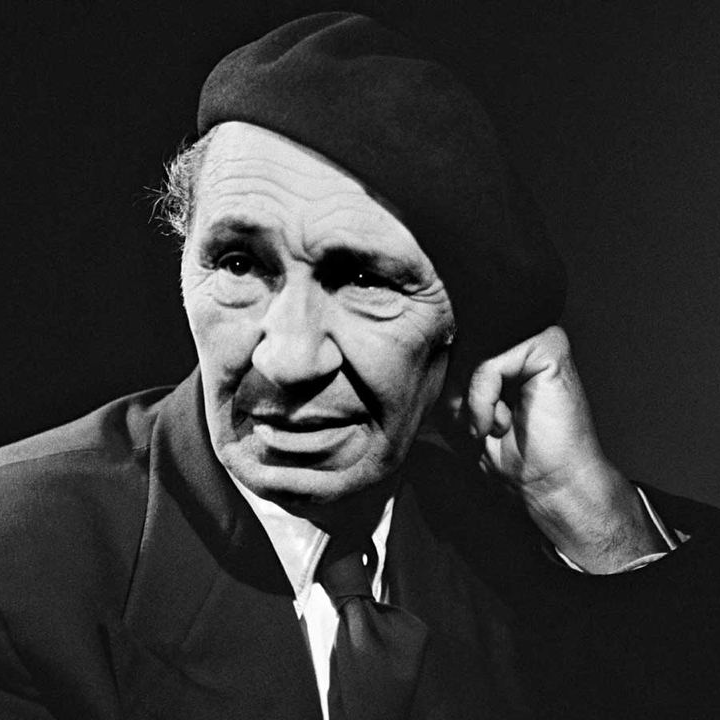
the fisherman of halicarnassus
- 155
- 4
- 4
- 1
- 1 day, 1 hour ago
most liked (149) - page 9
-
battle of gettysburg
-
core-periphery model
the core-periphery model is a tale of two cities—well, more accurately, a tale of countless cities and regions, split into the haves and the have-nots of the economic world. it's like looking at a map where some areas glitter with wealth, innovation, and power (the core), while others (the periphery) are like the less-visited backdrops, struggling and often exploited.
imagine this model as a solar system:
the core: these are the suns of our economic universe—the new yorks, londons, and tokyos. they beam brightly with high technology, strong governments, and concentrated wealth. here, decisions are made, cultures are set, and innovations thrive.
the periphery: orbiting the bright suns, these are the distant planets like rural areas in africa, asia, or south america, often rich in resources yet lacking in technology, infrastructure, and capital. they provide the raw materials and labor to the core but see less of the economic pie in return.
the semi-periphery: these are akin to planets within a habitable zone, like brazil, india, and china. not as dominant as the core, but more developed than the periphery, they exploit the periphery while being exploited by the core, serving as a buffer or a stepping stone between the two extremes.
this model helps explain why some areas of the world advance rapidly, accumulating wealth and influence, while others lag behind, trapped in a cycle of dependency. it's a powerful lens through which to view global inequalities and dynamics, illustrating how economic gravity pulls resources and power toward the core, leaving the periphery in its shadow. -
pickett’s charge
pickett's charge was the civil war's equivalent of a dramatic, high-stakes gamble, a bold throw of the dice in the smoky haze of battle. it was the centerpiece of the battle of gettysburg, taking place on july 3, 1863, and remains one of the most infamous military maneuvers in american history.
imagine it as a grand yet tragic theatrical act in three parts:
the buildup: confederate general robert e. lee decided to stake everything on breaking the union lines after two days of inconclusive fighting. he ordered nearly 12,500 men to march across open fields towards a well-fortified enemy.
the assault: led by major general george pickett and other division commanders, this massive infantry advance stretched over a mile wide. as they moved, the union artillery and rifle fire tore into them, creating a storm of lead and iron.
the aftermath: the charge reached the union lines but faltered under overwhelming defensive fire. it ended in devastating losses for the confederates, marking a turning point in the war and symbolizing the high cost of lee's gamble.
pickett's charge was a poignant example of courage and catastrophe intertwined, a bold stride that ended in retreat, influencing the fate of the nation. it's a historical moment that encapsulates the desperation and the decisive nature of battle choices in the crucible of war.
(see: battle of gettysburg) -
oxymoron
an oxymoron is a playful paradox, wrapping contradiction in a cozy embrace. it's like a linguistic gymnast, bending together words that don't seem to fit, yet somehow they perform harmoniously. think of it as a verbal yin and yang, where opposites not only attract but dance cheek to cheek.
a few examples:
deafening silence – when the quiet is so overpowering, you can almost hear it.
bittersweet – like the last bite of chocolate as a favorite movie ends, it's joy laced with sadness.
jumbo shrimp – a tiny giant of the sea, small in size but big on name.
seriously funny – laughing till it hurts, because it's that hilarious.
awfully pretty – striking beauty that surprises, more than just pleasing to the eye.
each oxymoron brings together two contradictory elements that, against all odds, end up making perfect sense. -
baron d'holbach
baron d'holbach (paul-henri thiry, baron d'holbach, 1723-1789) was a pivotal figure in the french enlightenment, renowned for his philosophical materialism and radical atheism. born in the german palatinate but primarily active in paris, d'holbach was a prolific writer, philosopher, and encyclopedist who made significant contributions to enlightenment thought through his critiques of religion and advocacy for scientific rationalism.
d'holbach's salon in paris became a hub for many leading intellectuals of the time, including denis diderot and jean-jacques rousseau. it was here that many ideas central to the enlightenment were debated and developed. despite his german origins, d'holbach wrote primarily in french, and his works played a crucial role in shaping french intellectual culture.
his most famous works include system of nature (1770) and the social system (1773), in which he argued that the universe operated solely on the basis of physical matter and motion, devoid of divine intervention. in "system of nature," d'holbach contended that everything in the universe could be explained through the laws of nature, and that the concept of god was unnecessary for understanding natural phenomena. this work is often seen as the quintessence of atheistic materialism in the enlightenment era.
d'holbach's ideas were highly controversial and deemed subversive in his time, leading to a significant backlash from both religious institutions and conservative political forces. his philosophical stance positioned him as a radical thinker who pushed the boundaries of atheism and materialism further than most of his contemporaries.
his intellectual legacy lies in his vehement challenge to religious orthodoxy and his contribution to the development of secular and humanist thought in modern philosophy. d'holbach's work paved the way for later intellectual movements that embraced atheism and materialism, influencing figures such as karl marx and friedrich engels. his emphasis on reason and empirical evidence as the foundations of knowledge continues to be influential in contemporary humanist and secular thinking. -
james bentham
english philosopher. "the right thing to do, the just thing to do is to maximize utility."
-
the moral side of murder
"the moral side of murder" is a well-known thought experiment that combines elements of game theory and philosophy to explore ethical dilemmas. it's often used to discuss the tension between moral principles and rational decision-making in a hypothetical scenario. let's break down the components and implications of this thought experiment:
scenario:
imagine you are a participant in a game where you and another person are given the opportunity to make a decision that affects both of your lives. the scenario is structured as follows:
– you and the other person each have the option to either cooperate or betray.
– if both of you choose to cooperate, you both receive a moderate reward (let's say 2 points each).
– if you choose to betray while the other person cooperates, you will receive a substantial reward (let's say 4 points), but the other person will suffer a severe consequence (let's say -4 points).
– if both of you choose to betray, you both receive a small reward (let's say 1 point each).
game theory perspective:
from a game theory standpoint, this scenario is reminiscent of the classic prisoner's dilemma game. in the prisoner's dilemma, two individuals face a similar choice: cooperate with each other or betray the other. the dilemma arises because each player's optimal choice depends on the choice made by the other player.
in "the moral side of murder," if we assume that the participants are solely focused on maximizing their rewards, the rational choice would be to betray, regardless of the other person's choice. this is because the payoff for betraying is always higher than cooperating, no matter what the other person does.
philosophical implications:
from a philosophical perspective, this thought experiment raises important questions about ethics, morality, and the clash between self-interest and moral principles. it prompts considerations such as:
utilitarianism vs. deontology: participants must decide whether to prioritize their personal gain (utilitarianism) or adhere to a moral principle of not causing harm to others (deontology). choosing to betray maximizes personal gain but may involve causing harm to another person.
consequences of actions: the scenario highlights the potential consequences of one's actions on others. participants must weigh the immediate benefits against the harm they might cause.
social contracts: this thought experiment can be seen as a reflection of social contracts in society. it asks whether individuals would choose to act in ways that promote the well-being of the collective, even if it means sacrificing some personal gain.
integrity and trust: the choices made by participants reveal their willingness to uphold trust and integrity. cooperating reflects a commitment to working together, while betraying erodes trust and damages relationships. -
virtue signaling
virtue signaling is the act of expressing opinions or actions primarily to show others that you hold certain values, rather than for the purpose of acting on those values. the term often carries a negative connotation, implying that the person engaging in virtue signaling is doing so primarily to enhance their own reputation or social standing, rather than out of genuine conviction.
the concept of virtue signaling has been around for centuries. one of the earliest examples can be found in the works of the ancient greek philosopher aristotle, who wrote about the concept of "eudaimonia," or human flourishing. aristotle argued that true eudaimonia could only be achieved by living a virtuous life, and that virtue was a habit that could be cultivated through deliberate practice.
throughout history, people have engaged in various forms of virtue signaling to demonstrate their commitment to certain values or causes. for example, during the 18th century, wealthy europeans would often make donations to charitable causes as a way of signaling their wealth and status. in more recent times, people might use social media to share articles or memes related to a particular cause or issue, or wear clothing or accessories that display symbols or slogans associated with a particular group or movement.
however, the concept of virtue signaling has also been criticized for being insincere or superficial, with some people arguing that it is used more as a way to gain social approval or to make oneself feel good, rather than as a genuine expression of belief. -
begging the question
begging the question is a logical fallacy that occurs when an argument relies on a premise that has already been assumed to be true, without providing any evidence to support it. this creates a circular argument, where the conclusion is simply restated as the premise, and the argument fails to provide any real support for its conclusion.
here is an example of an argument that begs the question:
premise: the earth is flat.
conclusion: the earth is flat.
in this argument, the premise and the conclusion are the same, and there is no evidence provided to support the premise. this creates a circular argument that does not provide any real support for the conclusion.
another example of begging the question might be:
premise: god exists because the bible says so.
conclusion: god exists.
in this argument, the premise relies on the assumption that the bible is a reliable source of information, but this assumption is not proven or supported. as a result, the argument relies on a premise that has already been assumed to be true, without providing any evidence to support it.
in order to avoid begging the question, it is important to ensure that the argument is based on evidence and logical reasoning, rather than relying on assumptions or unproven premises. this can help to ensure that the argument is sound and persuasive, rather than relying on circular reasoning or unsupported assumptions. -
cash crop
a cash crop is a type of agricultural crop that is grown specifically for sale in the market, rather than for personal use or subsistence. cash crops are typically grown on a large scale and are an important source of income for many farmers around the world. the cultivation of cash crops has a long history, dating back to ancient civilizations.
some examples of cash crops that have been grown for centuries include:
wheat: wheat has been grown for thousands of years and is one of the oldest and most important cereal crops in the world. it is grown in many parts of the world, including europe, asia, and the americas.
cotton: cotton is a cash crop that has been cultivated for thousands of years in the middle east, india, and china. it is an important source of fiber for clothing and textiles.
sugar: sugar cane is a tropical cash crop that has been grown in the caribbean, south america, and southeast asia for centuries. it is an important source of sugar, which is used in a variety of food and beverage products.
tobacco: tobacco is a cash crop that has been grown in the americas for centuries. it is used in the production of cigarettes and other tobacco products.
coffee: coffee is a cash crop that has been grown in tropical regions of the world for hundreds of years. it is an important source of income for many farmers and is used to produce a popular beverage.
tea: tea is another cash crop that has a long history of cultivation. it is grown in many parts of the world, including asia, africa, and south america, and is used to produce a popular beverage.
overall, the cultivation of cash crops has played a significant role in the economic development of many regions around the world. -
sobiyet
sobiyet is a traditional turkish dessert made of phyllo dough filled with cream or a mixture of crushed nuts and sweetened with syrup or honey. it is similar to baklava, another traditional turkish pastry made with layers of phyllo dough and a filling of nuts, but sobiyet is typically made with a circular shape and a filling of cream rather than nuts.
the word "sobiyet" is believed to be derived from the persian word "şöb," which means "cream." this refers to the creamy filling that is used in sobiyet. the dessert is believed to have originated in the ottoman empire and has a long history in turkish cuisine.
to make sobiyet, thin layers of phyllo dough are layered in a circular pan and then filled with a creamy filling made of milk, sugar, and cornstarch or flour. the layers of dough and filling are then baked until the phyllo is crisp and golden brown. once baked, the sobiyet is drizzled with a syrup made with sugar, water, and sometimes lemon juice or rosewater.
sobiyet is a popular dessert in turkey and is often served at celebrations and special occasions. it is also a popular street food and can be found at bakeries and cafes throughout the country. it is typically served in small slices and is often garnished with a sprinkle of powdered sugar or a dusting of ground nuts. -
petite bourgeoisie
the term "petite bourgeoisie" refers to a social class that occupies a position between the working class and the capitalist class in a capitalist society. it is often used to describe small business owners, self-employed individuals, and professionals who are not part of the capitalist class but who have some level of economic and social power.
the petite bourgeoisie is characterized by their ownership of small businesses, their relative independence from the capitalist class, and their intermediate social and economic position. they are often seen as being caught between the working class and the capitalist class, with economic and social interests that may not always align with either group.
examples of the petite bourgeoisie might include small business owners such as sole proprietors, independent contractors, and freelancers. they may own their own businesses, such as a small retail shop or a consulting firm, or they may work for themselves in a trade or profession, such as a lawyer or a dentist. the petite bourgeoisie may also include professionals such as doctors, teachers, and engineers who are not directly involved in the ownership or management of a business but who have a degree of economic and social independence.
overall, the petite bourgeoisie is a diverse and varied group, and their social and economic position may change over time depending on the success of their businesses and their ability to adapt to changing economic conditions. -
reno
reno is the largest city in washoe county, nevada, located in the western part of the state. the city has a rich history dating back to the mid-19th century.
the area that is now reno was originally inhabited by the paiute and washoe tribes. in the 1840s, european settlers arrived in the area and established a trading post called lake's crossing, which was named after the nearby truckee river.
in 1868, the central pacific railroad chose the site of lake's crossing as the eastern terminus of its transcontinental railroad, and the town was renamed reno in honor of union general jesse l. reno. reno was incorporated as a city in 1868 and quickly became an important transportation hub for the region.
in the late 19th and early 20th centuries, reno became known as a center for gambling, divorce, and other forms of vice. the city's reputation as a wild and lawless place earned it the nickname "the biggest little city in the world."
in the 1950s and 1960s, reno experienced a period of rapid growth and expansion. the city's economy diversified, and it became a major center for tourism, with the construction of several casinos and hotels. in the decades since, reno has continued to grow and evolve, becoming a diverse and vibrant city with a thriving economy and a rich cultural heritage. -
zero
(see: 0)
-
solipsism
solipsism is a philosophical idea that holds that the individual self is the only thing that can be known to exist, and that all external reality, including other minds, is uncertain and cannot be known. this idea is based on the concept that the self is the only thing that can be experienced directly, and that all external reality must be inferred from the evidence of the senses. this leads to the conclusion that the external world, including other minds, may not actually exist at all, and that the individual self is the only thing that can be known with certainty. this philosophy is often criticized for being overly skeptical and for ignoring the evidence of our senses and the existence of other people.